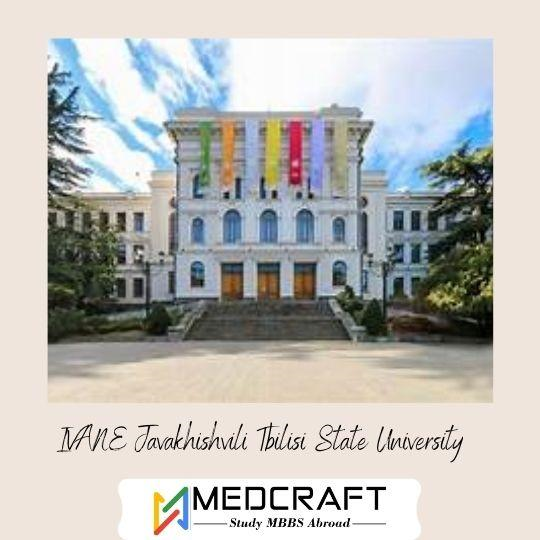
Study MBBS from IVANE Javakhishvili Tbilisi State University, Georgia
About Ivane Javakhishvili Tbilisi State University (TSU)
Ivane Javakhishvili Tbilisi State University (TSU), founded in 1918, holds the distinction of being the first national university in the Caucasus. It laid the foundation for a European-style higher education institution, built on rich Georgian cultural and educational traditions. The concept of establishing a university in Georgia dates to the early 19th century and became more tangible with the formation of the Nobiliary Manorial Estate Bank in Tbilisi, which supported cultural and educational advancement.
The idea gained momentum in the early 20th century under the leadership of Ivane Javakhishvili, a Georgian scholar and Privat Docent at the University of Saint Petersburg. Following the February 1917 Revolution, Javakhishvili intensified his efforts to establish a Georgian university. On May 12, 1917, a meeting was held in Tbilisi, chaired by Ekvtime Takaishvili, where the Georgian Free University Society was established—this organization would play a crucial role in founding the university.
By late 1917, the Faculty of Philosophy was created, incorporating humanities, natural sciences, and mathematics. TSU officially opened its doors on January 26, 1918, coinciding with the commemoration of King David the Builder. Petre Melikishvili was elected as the first Rector, while Ivane Javakhishvili led the Faculty of Philosophy.
Notable early lecturers included Ivane Javakhishvili, Ekvtime Takaishvili, Korneli Kekelidze, Shalva Nutsubidze, and others. In 1989, the university was renamed in honour of its founder.
Today, TSU stands as one of Georgia’s leading research institutions, administering approximately 200 local and international research grants annually. With about 22,000 students, it offers Bachelor’s, Master’s, Doctoral, and vocational education, along with short- and long-term certificate programs.
TSU is a member of multiple international education networks and fosters partnerships with European and global universities, enabling double-degree programs and exchange opportunities. It actively promotes academic freedom, critical and creative thinking, and inclusive education. The university’s mission is to preserve national and universal values, contribute to intellectual and socio-economic development, and ensure excellence in student-centred learning.
TSU has a clear vision of becoming a globally significant European-standard university. By 2024, it aims to harmonize academic programs with global labour market needs, emphasize research innovation, and advance internationalization across education and administration.
University Highlights
- Established - 1918
- Location - Tbilisi, Georgia
- National Rank - #1 in Georgia
- National Accreditation - NCEQE (Georgia)
- Global Ranking - 1000 - 1100 (QS / UniRank / Webometrics estimate)
Recognized by the following medical bodies
- World Health Organization (WHO)
- National Medical Commission (NMC - India)
- World Federation for Medical Education (WFME)
- Educational Commission for Foreign Medical Graduates (ECFMG)
- Foundation for Advancement of International Medical Education and Research (FAIMER)
MBBS Program Details (Medical Doctor Program)
- Medium of Instruction - English
- Degree Validity - Globally Recognized
- Clinical Training - Teaching Hospitals in Georgia
- Duration - 6 Years (5 Years Academic + 1 Year Internship)
- Program Name - MD (Medical Doctor – Equivalent to MBBS)
- Program Type - Integrated Single-Cycle Undergraduate Program
Why Choose Ivane Javakhishvili Tbilisi State University for MBBS
Ivane Javakhishvili Tbilisi State University is not only the oldest but also one of the most respected academic institutions in Georgia and the Caucasus region. Founded with the intent of promoting national and intellectual progress, it has remained a leader in higher education and scientific research.
One of the university’s strongest advantages is its global recognition. The MBBS degree (Medical Doctor program) is recognized by major global organizations including WHO, NMC (India), WFME, FAIMER, and ECFMG. This recognition enables students to pursue medical careers worldwide or appear for licensing exams in countries like India, the US, and others.
TSU’s MBBS program is taught entirely in English, eliminating language barriers for international students. The curriculum balances foundational medical sciences with clinical practice, ensuring students are thoroughly trained. Hands-on clinical training is provided in top-tier hospitals affiliated with the university, offering real-time patient care experience.
The university actively promotes research and development and has over 200 ongoing scientific grant programs annually. Students benefit from a multicultural environment due to internationalization efforts, which include exchange programs, double degrees, and partnerships with European institutions.
Tbilisi, the capital of Georgia, offers a safe, affordable, and vibrant environment for international students. Living costs are moderate compared to other European countries, and the university provides on-campus accommodation with necessary amenities.
In addition to academic excellence, TSU provides an enriching campus life with diverse student activities, clubs, and cultural exposure, making it an ideal destination for aspiring medical professionals.
Entry Criteria
|
Category |
Age criteria |
Last qualification |
Mandatory subjects in HSC |
Scores required |
Others |
|
General |
17 years |
HSC |
PCBE |
50% |
NEET Qualified |
|
SC / ST / OBC |
17 years |
HSC |
PCBE |
50% |
NEET Qualified |
Note –
- PCBE – Physics, Chemistry, Biology & English
- Minimum 17 years by December 31 of the admission year
- IELTS – Not mandatory, however, English proficiency is expected
Course duration
- Total Duration: 6 years
- Academic Study: 5 years
- Internship/Clinical Rotations: 1 year
Admission Process
- Submit the application
- Share required documents
- Receive the admission letter
- Pay the tuition fees
- Receive the visa invitation letter
- Apply for a student visa
- Travel and complete your enrolment
Document Checklist
Application to admission
- Valid Passport
- HIV Test Report
- Birth Certificate
- SSC & HSC Marksheet
- Passport-size Photographs
- NEET Scorecard (for Indian students)
Admission to enrolment
- Admission Letter from TSU
- Medical Fitness Certificate
- Fee Payment Receipts
- Visa Invitation Letter
- Student Visa
Fees Structure (Total for 6 years)
|
Particulars |
Academic Fees – USD (Annually) |
Fees – INR (Annually) |
|
Tuition fees |
8000 |
664000 |
|
Hostel fees |
3500 |
290500 |
|
Miscellaneous (First year only) |
3000 |
249000 |
Note -
- Fees are approximately and may be subject to change
- Fees exclude other personal expenses like food, travel, insurance, and textbooks
- Accommodation costs may vary depending on room type and lifestyle
- INR 83 is used to mark the conversion from USD to INR and may vary
Course Duration
- Total Duration: 6 years
- Academic Study: 5 years
- Internship/Clinical Rotations: 1 year
Accommodation Details
- Monthly Cost - 250 to 400 USD
- Room Types - Shared and Private
- Amenities - Furnished, Wi-Fi, Heating, Kitchen, Laundry
- Hostel Availability - Available for international students
Contact us
- Official Website - https://www.tsu.ge
- Contact number - +91 8401497914