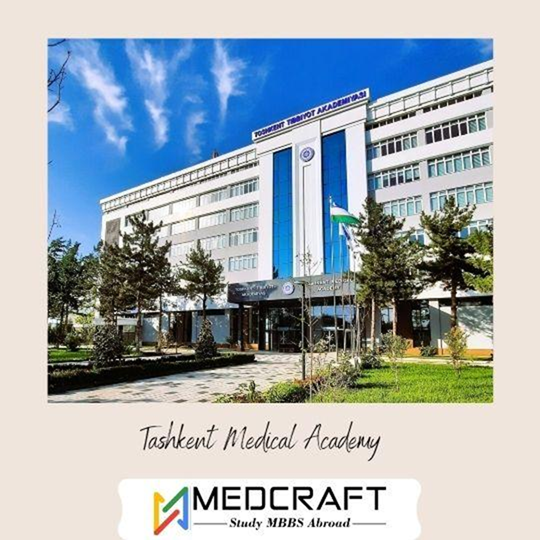
Study MBBS from Tashkent Medical Academy, Uzbekistan
About Tashkent Medical Academy
The Tashkent Medical Academy (TMA) stands as a distinguished institution in the field of medical education, with a legacy that spans over a century. Its origins date back to 1920 when the medical faculty was established at Turkestan State University. Over the decades, this faculty evolved and was reorganized in 1931 as the Tashkent Medical Institute. Recognizing the growing need for specialization and expanded medical education, the institute was further divided into the First and Second Tashkent State Medical Institutes in 1990.
In a significant development in 2005, the President of Uzbekistan decreed the merger of these two institutes to form the unified Tashkent Medical Academy. This strategic consolidation aimed to enhance the quality and consistency of medical training in Uzbekistan. Since then, TMA has become one of the premier medical institutions in Central Asia.
TMA offers a robust and modern MBBS program that integrates theoretical knowledge with practical clinical training. The curriculum is developed in alignment with international standards, ensuring graduates are competent in contemporary medical practices. The faculty is composed of highly experienced educators and researchers, dedicated to fostering academic excellence and clinical competency.
The academy actively engages in international collaborations with reputed institutions such as Humboldt University (Germany), Seoul National University (South Korea), and the First Moscow State Medical University. These partnerships facilitate academic exchange, joint research, and adoption of global best practices in medical education.
TMA is known for its strong emphasis on clinical training, offering students hands-on experience in affiliated hospitals that are equipped with modern medical technology. The institution prioritizes real-world exposure and patient interaction to prepare students effectively for professional practice.
International students are supported through well-maintained hostels and an inclusive campus environment. Essential amenities, libraries, study rooms, and recreational facilities ensure a balanced student life. Additionally, Indian mess facilities cater to the dietary preferences of Indian students, making it a favourable destination for Indian medical aspirants.
With global recognition from prestigious bodies like NMC, WHO, and FAIMER, an English-medium curriculum, affordable tuition fees, and a multicultural environment, TMA is an attractive choice for students seeking quality medical education abroad.
University Highlights
- Location - Tashkent
- National Ranking - 13
- Global Ranking - 7537
- Subject-Specific Ranking - 301+ globally (Medicine and Health Sciences - Times Higher Education)
Recognized by the following medical bodies
- World Health Organization (WHO)
- National Medical Commission (NMC - India)
- Foundation for Advancement of International Medical Education and Research (FAIMER)
MBBS Course Details
- Course name - MBBS
- Intake - September, February
- Medium of Instruction - English
- Duration - 6 Years (5 years Academic + 1 year Internship)
Why Choose Tashkent Medical Academy?
Tashkent Medical Academy offers a holistic and globally competitive medical education rooted in a century-old legacy. Its long-standing history in medical training makes it a trusted name in Central Asia and beyond. TMA stands out for several key reasons:
-
Academic Legacy and Excellence
With origins going back to 1920, TMA has a rich history of academic excellence. The evolution of the institution into a full-fledged medical academy in 2005 consolidated its position as a leader in medical education. TMA’s curriculum is based on international benchmarks, combining robust theoretical education with hands-on clinical experience.
-
Global Recognition and Accreditation
The MBBS degree offered by TMA is globally recognized. It holds accreditations from major global institutions and councils such as the National Medical Commission (NMC) of India, the World Health Organization (WHO), and the Foundation for Advancement of International Medical Education and Research (FAIMER). Graduates are eligible to appear for licensing exams across various countries.
-
Affordable Quality Education
TMA offers a cost-effective alternative to private medical colleges in several countries, including India. The low tuition and hostel fees make it financially accessible, especially for students seeking global exposure without incurring heavy debts.
-
International Collaborations
TMA maintains academic and research partnerships with renowned global institutions like Humboldt University in Germany and Seoul National University in South Korea. These collaborations enrich the student experience through faculty exchanges, seminars, and joint projects.
-
English-Medium Instruction
The entire MBBS program is taught in English, making it suitable for international students, particularly those from India and other English-speaking countries.
-
Culturally Inclusive Environment
With a diverse international student body and Indian mess facilities, TMA ensures students from various cultural backgrounds feel at home. This multicultural exposure also fosters personal growth and global awareness.
Entry Criteria
|
Category |
Age criteria |
Last qualification |
Mandatory subjects in HSC |
Scores required |
Others |
|
General |
17 years |
HSC |
PCBE |
50% |
NEET Qualified |
|
SC / ST / OBC |
17 years |
HSC |
PCBE |
40% |
NEET Qualified |
Note -
- PCBE - Physics, Chemistry, Biology & English
- Minimum 17 to 25 years by December 31 of the admission year
- IELTS - Not mandatory, however, English proficiency is expected
Admission Process
- Submit the application
- Share required documents
- University will review eligibility
- Receive an off letter
- Pay the fees
- Apply for visa
- Travel and complete enrolment
Document Checklist
Application to admission
- Valid Passport
- Birth Certificate
- NEET Scorecard
- SSC & HSC Marksheet
- Passport-sized Photographs
Admission to enrolment
- Visa Copy
- Proof of Fee Payment
- Medical Fitness Certificate
- Admission Letter from TMA
- Police Clearance Certificate (if required)
Fee Structure (Approximate)
|
Particulars |
Academic Fees – USD (Annually) |
Fees – INR (Annually) |
|
Tuition fees |
3500 |
290500 |
|
Hostel fees |
600 |
49800 |
|
Miscellaneous (First year only) |
2250 |
186750 |
Note -
- Fees are approximately and may be subject to change
- Fees exclude other personal expenses like food, travel, insurance, and textbooks
- Accommodation costs may vary depending on room type and lifestyle
- INR 83 is used to mark the conversion from USD to INR and may vary
Accommodation Details
- Hostel Capacity - Five dormitories with a total capacity of 1,700 students
- Room Options - Shared rooms (2, 3, or 4 beds)
- Amenities - Fully furnished rooms, Wi-Fi, reading areas, kitchens, security, laundry, gym, and recreational facilities
- Indian Mess - Available at additional cost on campus
- Living Environment - Safe, inclusive, and conducive for academic focus
Contact us for more details
- Official Website - https://tma.uz
- Contact number - +91 8401497914