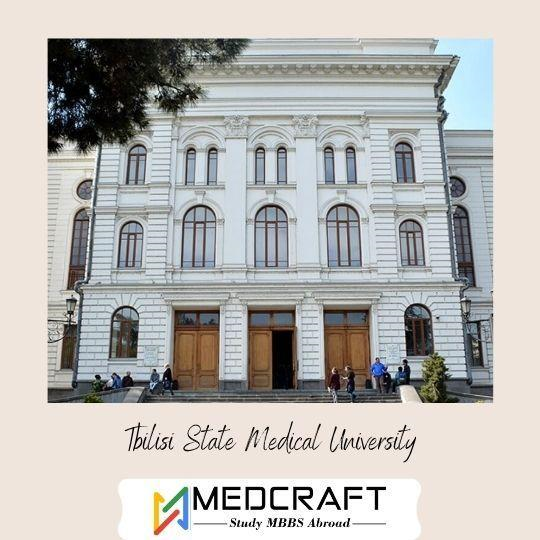
Study MBBS from Tbilisi State Medical University, Georgia
History of the University
The Georgian University was solemnly opened on 8th of February 1918 (old style, 26th of January), the day of remembrance of the Georgian King David the Builder. Since that, this day remains one of the most significant events in the history of the nation.
The founders of the Georgian University well understand the importance of introducing higher medical education. The primary initiator of the university foundation, the reverend Professor Ivane Javakhishvili, had been speaking about the reasons for the establishment of the Medical Faculty “We still need to research the endemic flora and fauna in our country. Many human diseases have various characteristics, and most are yet unstudied. Consequently, scientific workers at our university’s Medical and Natural Sciences faculties have a broad challenge area.
The first Rector of the University Professor Petre Melikishvili was an active supporter of medical faculty creation. At the meeting of “Georgian Physicians and Natural Sciences Society” (12th of October 1917), he expressed his opinion about the necessity of opening the medical and natural sciences faculty.
On February 27th, 1918, the University Professors Faculty Council confirmed the exigency of the creation of the Medical Faculty. On June 17th, the same Council of Georgian doctors and Natural Scientists, in the presence of the Chairman Spiridon Virsaladz decided to open the mathematics Natural Sciences and Medical faculty.
On June 10, 193O Tbilisi State Medical Institute was founded based on the faculty of Medicine of Tbilisi State University (TSU). This has become a powerful stimulus for development of Education and Medical Sciences in Georgia.
Tbilisi State Medical University at the foundation consisted of three faculties:
- Medical - Preventive (including Division of Stomatology)
- Sanitary - Preventive
- Pharmacochemistry
During the last 80 years, University in different periods were founded and functioning the following faculties –
- Pediatrics (since 1931)
- Stomatology (since 1936)
- Military Medicine (since 1993)
- Medical-Biology (since 1994)
- Medicine and Psychiatry (since 1996)
Since 1996, Lisi State Medical University has five faculties, Medicine, Stomatology, Pharmacy, Public Health, Physical Healthcare and Rehabilitation. Rehabilitation Medical University runs four Higher Education Programs, General Practice Nurse, Midwifery, Medical Devices Technician, and Pharmacy Technician.
The analysis of objective, sometimes revolutionary, political and ideological changes in the country and Society that took place in the decades of 90s of the last century, revealed that for the achievement of the University goal, the establishment of a larger space is necessary. The newly acquired autonomy would have been merged with a new University structure, which was the way for the transformation of the Medical Institute into a University and for that, the preconditions already existed. The Author of this objective and well-founded request was Tbilisi State Medical University itself.
The 24th of November 1992 is the historic day for Higher Medical Education in Georgia. The new stage was launched by the transformation of Tbilisi State Medical Institute into Tbilisi State Medical University.
History of Tbilisi State Medical University and higher medical education goes back more than 9 decades in Georgia.
Tbilisi State Medical University, from the very beginning, has been at the forefront of overcoming the XXI century challenges of reforming medical education. In 1997 University had already developed a strategy of outcome-oriented teaching methodology implementation. The strategy has been developed based on European expert’s recommendations. After all, the University is a member of the Association of Medical European Education (AMEE), also a member of the World Federation for Medical Education (WFME) and cofounder of the East–European Association of Medical Education (EEAME). University is not only the executive of legislative and recommendatory regulations of these International Organizations but also participates in the recommendation’s systematization process.
According to the above-mentioned experts, modern, competitive International Medical education considers the following main points: Critical thinking, Information management and communicative skills are the basis for the development of the basic sciences and public health, professional values and relations.
By 2006, the necessity of implementing the already existing Law on Higher Education of Georgia on the one hand, and the need of implementation full coverage of European and global advantages of medical education together with international commitments to reform the system of medical education on the other hand, have put the medical community to face the objective challenges.
The health care system with the old regulatory and financial mechanisms was poorly managed. Accordingly, the traditional forms of training of qualified medical professionals required innovative changes. A three-stage system of higher education (baccalaureate, magistracy and doctorate) called for coordination with the process of post-graduate education. All this would make it possible to harmoniously implement the “life-long learning principles”, although it’s clear that the creation of such a continuum requires appropriate material and human resources.
All the aforesaid have caused a very significant step in Georgia's system of higher medical education - in 2006 Tbilisi State Medical Academy was integrated into Tbilisi State Medical University. The merging of these traditional medical schools in TSMU as one Medical Institution united also undergraduate and postgraduate medical education, facilitating multilateral development of traditional medical and the entire natural sciences.
By 2007, the faculty of Therapeutic Physical Training and Rehabilitation of the State Academy of Physical Culture and Sport joined TSMU.
Tbilisi State Medical University collaborates with more than 40 Universities and centers; international scientific cooperation has led to the launch of numerous joint projects of International or National significance.
Nowadays, TSMU employs highly intelligent, highly qualified pedagogical personnel and scientists. The University's traditions, experience, reputation/authority and potential give hope for its further successful development.
Tbilisi State Medical University (TSMU) – MBBS Program Overview
- Established: 1918
- Location: Tbilisi, Georgia
- Medium of Instruction: English
- Annual Intakes: September and February
- Program Duration: 6 years (5 years academic + 1 year internship)
Recognized by the following medical bodies
- World Health Organization (WHO)
- National Medical Commission (NMC, India)
- Educational Commission for Foreign Medical Graduates (ECFMG, USA)
Eligibility Criteria
|
Category |
Age criteria |
Last qualification |
Mandatory subjects in HSC |
Scores required |
Others |
|
General |
17 years |
HSC |
PCBE |
50% |
NEET Qualified |
|
SC / ST / OBC |
17 years |
HSC |
PCBE |
45% |
NEET Qualified |
Note -
- PCBE – Physics, Chemistry, Biology & English
- Minimum 17 years by December 31 of the admission year
- IELTS – Not mandatory, however, English proficiency is expected
Course Duration
- Total Duration: 6 years
- Academic Study: 5 years
- Internship/Clinical Rotations: 1 year
Fee Structure (2025-26)
|
Particulars |
Academic Fees – USD (Annually) |
Fees – INR (Annually) |
|
Tuition fees |
48000 |
3984000 |
|
Hostel fees |
9600 |
796800 |
|
Miscellaneous (First year only) |
2500 |
207500 |
Note -
- Fees are approximately and may be subject to change
- Fees exclude other personal expenses like food, travel, insurance, and textbooks
- Accommodation costs may vary depending on room type and lifestyle
- INR 83 is used to mark the conversion from USD to INR and may vary
Accommodation & Living Expenses
- Accommodation - TSMU does not provide on-campus hostel facilities for international students. Students typically opt for off-campus accommodations, with monthly rents ranging from $300 to $500, depending on location and amenities.
- Living Expenses - Monthly expenses, including food, transportation, and utilities, average between $400 and $500, varying based on lifestyle choices.
Global Recognition & Opportunities
- Clinical Training - TSMU boasts five university clinics, providing students with hands-on clinical experience during their studies.
- Post-Graduation Opportunities - Graduates are eligible to appear for following licensing exams facilitating global career prospects.
- National Exit Test (NEXT - India)
- Professional and Linguistic Assessments Board (PLAB - UK)
- United States Medical Licensing Examination (USMLE - USA)
Accreditations
- Recognized by the following medical bodies and allowing graduates to pursue medical licensure in various countries.
- World Health Organization (WHO)
- National Medical Commission (NMC - India)
- Educational Commission for Foreign Medical Graduates (ECFMG - USA)
Intakes
The university offers two intakes in an academic year. It is advisable to start the application process well in advance to accommodate document preparation and visa processing times.
|
Intake |
Applications start |
Applications end |
|
Fall |
June |
October |
|
Spring |
December |
February |